Blog / Marketing
Don't Let Your Customers Hibernate: How to Keep Your Service Business Busy This Winter
Winter marketing strategies for landscapers, contractors, cleaners, and property maintenance businesses in Central Oregon, plus the tools I would actually look at.

By Zack Lekas · · 8 min read
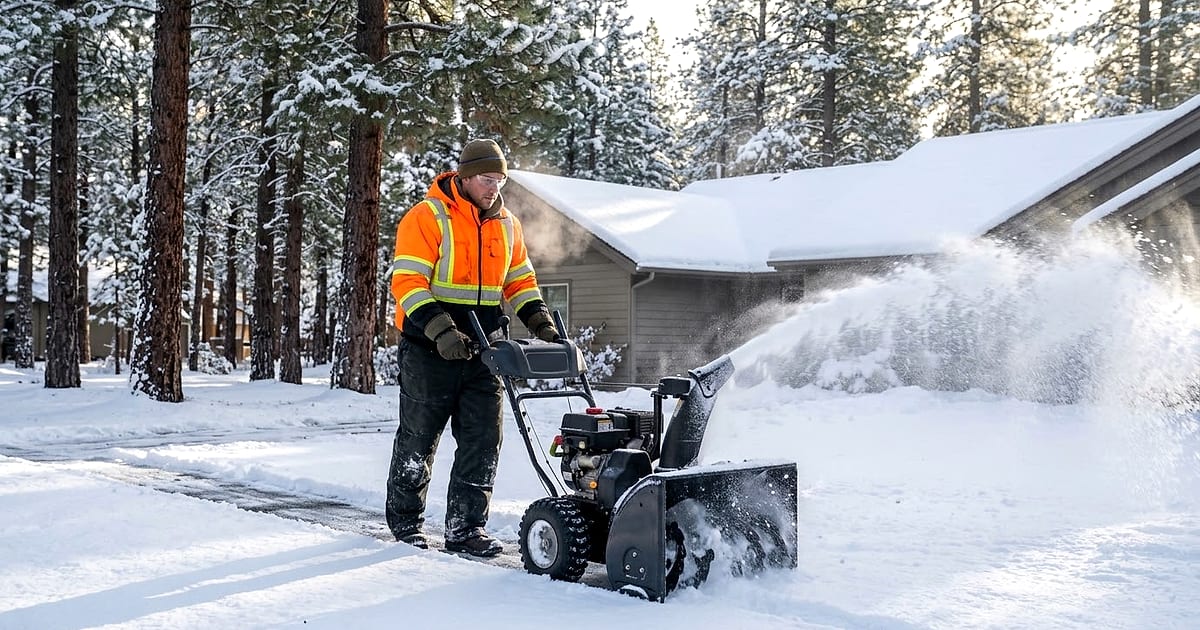
There comes a point every fall when Central Oregon reminds everyone who’s actually in charge.
One day you’re wearing a T-shirt. The next you’re scraping ice off your windshield while questioning your decision to live somewhere with four seasons.
For seasonal service businesses, the change in weather creates a familiar problem.
Summer work slows down. Customers stop calling. Equipment gets parked. The mower goes into the shop, and the owner goes into the “I should really do something about marketing” phase.
But the need for property maintenance doesn’t disappear just because the temperature drops. Driveways in Bend still need clearing. Rental properties in Sunriver still need checking. Businesses in Redmond and Sisters still need someone reliable when the weather turns.
The challenge is helping customers recognize which services they need next, and making your business easy to hire.
Here’s how I’d approach winter marketing for a landscaping, lawn care, cleaning, contracting, or snow removal business.
The short version
- Sell the next service before this season ends. Your past customers are your warmest leads. Tell them about winter services before the first storm, not during it.
- Give each winter service its own page. A clear snow removal page that names the towns you serve beats a single “Services” page that hopes for the best.
- Set up seasonal reminders. Group customers by what they’ve hired you for, and only message people who agreed to hear from you.
- Show real work. Photos of the driveway you cleared beat the word “passionate.”
- Plan the whole year. Market each season before it arrives.
- Use tools that fit your size. From free options like Yardbook to snow-specific software like Yeti.
1. Sell the next service before the current season ends
If you run a landscaping or property maintenance company, your existing customers are one of your most valuable marketing assets.
They already know your business. They’ve seen your work. And they’re more likely to recognize your name when you contact them again.
Before finishing a fall cleanup, ask whether the homeowner needs winter services.
Depending on your equipment, qualifications, and business model, that might include residential snow removal, walkway and steps clearing, commercial lot plowing, seasonal property checks for second homes, or other appropriate maintenance.
Don’t advertise services you aren’t equipped or insured to perform. “I own a shovel” is not a snow removal business plan.
And don’t wait until the first snowstorm to start talking about them. By then, the people who planned ahead have already booked someone, and everyone else is calling every number on Google at 6 a.m.
Send an email, or a text message to customers who’ve agreed to receive them, describing your winter services and how to request an estimate. A simple, timely message to past customers is usually more useful than another generic social media post.
2. Give winter services their own website pages
Here’s an easy opportunity.
Most businesses list every service on one page, then hope Google and customers figure things out. That’s like putting your whole menu on a sticky note.
I’d build a dedicated page for each important winter service. For example, a snow removal page could explain:
- Where you work. Name the towns and neighborhoods you actually serve: Bend, Redmond, Sisters, Sunriver, or wherever your routes go.
- Who you serve. Residential, commercial, HOAs, vacation rentals, or a mix.
- What you clear. Driveways, walkways, steps, parking lots, roofs, decks.
- How pricing works. Per visit, per storm, or a seasonal contract.
- How weather affects scheduling. Conditions in Sisters or Sunriver can be very different from Bend on the same morning.
- How to request a quote. A short form, a phone number, or both.
Avoid promising response times unless your crews can consistently meet them. “Cleared by 7 a.m., guaranteed” is a great headline until the night it snows eighteen inches.
A clear, accurate service page helps customers decide whether you’re the right company before they reach out, and it gives search engines a page that matches what people actually type, like “snow removal Bend” or “Sunriver property checks.” For more on how service pages help local search, see How do I increase my SEO?
If your current website can’t easily add pages like this, that’s usually a sign it’s time for a website that’s easier to grow.
3. Create a winter service reminder system
You don’t necessarily need expensive software for this.
Start by organizing customers according to the services they’ve used.
- A customer who booked a fall cleanup might want a spring cleanup.
- A homeowner who hired you for gutter cleaning might need it again next fall.
- A property manager who hires you for seasonal maintenance could need recurring services throughout the year.
The key is segmentation. Don’t send everyone the same message. The customer who hired you to clean their windows does not need three emails about commercial snow plowing.
And make sure customers have actually agreed to receive promotional emails and texts. Permission-based marketing isn’t just polite; it keeps your messages out of spam folders and keeps you on the right side of the rules.
Then make the reply easy. A reminder that ends with “call us sometime” is weaker than one that links straight to a quote form. If you use a form, test that it actually works before you send it to your whole list.
4. Use actual work to build trust
Here’s something I’d encourage every service business to do.
After a job, take a few good photographs of the finished result, with the customer’s permission where appropriate. Then ask for a review.
Over time, you’ll build a useful library of local proof: completed work, customer feedback, and examples of the kinds of projects you handle in Bend, Redmond, Sisters, and Sunriver.
That’s much stronger than filling your website with generic claims about being passionate, innovative, and dedicated to excellence.
I’m sure you’re passionate.
Show me the driveway you cleared.
Those photos also belong on your Google Business Profile, which is one of the free marketing tools every small business should use.
5. Build a full-year marketing calendar
Winter shouldn’t be the first time you think about winter marketing.
Map your services across the year:
| Season | Services to promote | When to start marketing |
|---|---|---|
| Fall | Cleanup, debris removal, final property maintenance | Late summer |
| Winter | Snow removal and other seasonal services you can reliably provide | Early fall |
| Spring | Landscaping prep, spring cleanup, exterior maintenance | Late winter |
| Summer | Routine lawn care, landscaping, recurring property work | Spring |
Then plan your website updates and marketing campaigns ahead of each season. Your homepage can even switch on its own, leading with whatever you’re selling that season. Is your website ready for the season? explains how a seasonal website works.
A blog post about spring cleanup published in late winter can be far more useful than one written after your spring calendar is already full. Search engines also need time to find new pages, so publishing early helps.
And remember: marketing isn’t simply getting attention. It’s making it easy for the right customer to contact you, understand your services, receive an estimate, and book the work.
6. Tools worth a look for seasonal service businesses
I looked at what’s available for landscapers, snow removal companies, and property maintenance businesses. Here’s what I’d consider, depending on your size. I’m not affiliated with any of them, and prices and free plans change often, so check current terms before you sign up.
For running jobs, quotes, and invoices
- Jobber: an all-in-one option for quoting, scheduling, invoicing, and customer reminders. It’s widely used by lawn care and snow removal businesses and works well if you want one system for the whole year. Paid, with a free trial.
- Yardbook: built for landscaping and lawn care, with a free plan that covers scheduling, estimates, invoicing, and customer management. A sensible starting point for a small crew that’s still using a notebook.
For snow removal specifically
- Yeti Software: built around snow and lawn work, with timestamped, GPS-verified service logs and photos. That record matters most for commercial lots and HOAs, where you may need to show exactly when a property was cleared and salted.
For job photos
- CompanyCam: organizes job photos by project with dates and locations, so your before-and-after library builds itself. Paid, with a free trial. If budget is tight, a shared phone album organized by customer works too. The important part is taking the photos.
For email to past customers
- Mailchimp and MailerLite: both handle permission-based email campaigns and let you group customers by service. Free tiers have been shrinking, including MailerLite’s free plan, which dropped to 250 subscribers in 2026, so check current limits.
For local visibility
- Google Business Profile: free, and worth updating every season. Add winter services, post recent job photos, and keep your hours current.
You don’t need all of these. A two-person crew might use Yardbook, a phone camera, and Google Business Profile. A company with commercial snow contracts might need Jobber or Yeti. Pick the smallest setup that solves your actual problem.
Common questions about winter marketing
How do landscaping businesses make money in the winter?
Many add winter services they’re equipped and insured for, such as snow removal, holiday lighting, or seasonal property checks. Others use the slower months to book spring work early, sign maintenance contracts, and fix their website and marketing systems so they’re ready when the busy season returns.
When should I start marketing snow removal services?
Early fall, before the first storm. Customers who want a seasonal contract usually look for one before they need it, and you want your service page published early enough for search engines to find it.
Should my snow removal page list the towns I serve?
Yes, as long as you actually serve them. Naming Bend, Redmond, Sisters, Sunriver, or specific neighborhoods helps customers know you cover their area and helps search engines match your page to local searches. Don’t list places you won’t drive to in a storm.
Do I need special software to send seasonal reminders?
Not at first. A spreadsheet grouped by service can work for a small customer list. Software like Jobber or an email tool like Mailchimp becomes worth it when you have more customers than you can keep track of by memory.
Make the off-season work for your business
I started Web Envisions because I see a real opportunity for smaller businesses to use websites and digital tools more effectively.
Not every business needs a complicated platform or a huge marketing budget.
Sometimes the most useful improvements are a better service page, a simpler quote process, a system for following up with existing customers, or a website that actually reflects what the company does today.
If you’re looking at a slower winter season, now might be a good time to get those pieces in place. I build custom websites for service businesses and can repair or improve the quote forms on the site you already have. I work with businesses in Bend, Redmond, Sisters, Sunriver, and across Central Oregon, including web design for Redmond businesses.
You can estimate a website on the pricing page in about a minute, or start with the Small Business Website Guide.
Winter might slow the grass down. It doesn’t have to slow your business down.
All postsNext: Before You Buy More Website Traffic, Test Your Contact Form